





Redefining density, making the best use of London’s land to build more and better homes
On 16 September 2015, London First and Savills published Redefining Density, Making the best use of London’s land to build more and better homes.
The report suggests that a new wave of housebuilding could be supported in London if City Hall and local authorities support a programme of housing densification.
It points out that London is not particularly densely developed compared to other major cities such as Paris and Madrid. Even one of London’s densest boroughs, Islington, with an average of 138 people per hectare, has a low density compared to Madrid’s Centro district, with an average of 286 people per hectare.
If low-density areas with good transport links had a moderately increased housing density, this could create approximately 1.4 million new homes across London. This is one million more than the 10-year London Plan housebuilding target, and if even just a tenth of these one million homes were built in the next 10 years, London could increase its housebuilding target to 52,000 new homes a year, close to the actual need for new homes.
The Greater London Authority suggests that London needs between 49,000 and 62,000 new homes every year. Savills estimates that an average of just 32,000 homes a year will be built under current plans over the next five years.
The report argues that higher density does not necessarily mean high-rise, and that tower blocks surrounded by empty space can have a lower density than Victorian terraced housing. It suggests that design quality is an important factor in persuading people that intensification of land use can work, and that higher density can create the critical mass required to support more shops, better local services, and improved social and transport infrastructure.
Jo Valentine, Chief Executive of London First said, “London is in the midst of a housing crisis and the business community believes housing costs are a major threat to the capital’s international competitiveness. We need London’s planning policies to give strategic support to building at a higher density, while being clear that the density of any particular development must be appropriate for its location.
Susan Emmett, Director, Residential Research, at Savills, said, “The opportunities to ensure that London is getting the most out of the development process are considerable, especially in the outer boroughs. Done properly, a higher density environment which combines a greater number of homes with shops, services and leisure space can bring many benefits to residents.”
[edit] Related articles on Designing Buildings Wiki
- Brownfield land.
- Compact living.
- Compact sustainable city.
- Could microhousing tackle London's housing crisis?
- Densification.
- Empty dwelling management orders.
- Garden suburb.
- Green belt.
- Huburb.
- Eco towns.
- Garden cities.
- High quality high density homes.
- London Plan.
- Masterplanning.
- Micro flats.
- New generation of town houses.
- Peter Barber - interview.
- Placemaking.
- Smart cities.
- Suburb.
Featured articles
Check out some of the best features and news from Designing Buildings as well as key stories from around the web.
Building Safety Regulator, 19 August

Gill Kernick appointed Independent Chair of Residents’ Panel.
Connecting knowledge, technology and conservation
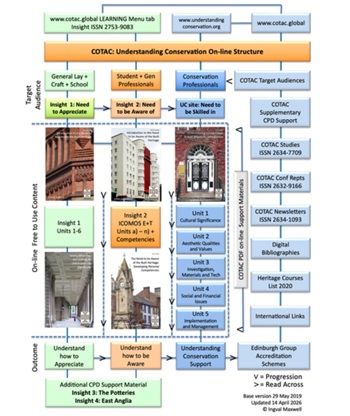
Building competence for the future of built heritage.
Building Regulations and Building Safety Act

CIOB publishes free advice for non-domestic clients.

Building Safety Newsletter from MHCLG.

An extraordinary record of steel engineering worldwide.

Households living near new pylons to save on bills.

ECA warns growth must not outpace grid capacity or skills.
The role of the client and decision making

CIOB response to built environment professions call for evidence.
Construction's sustainability reporting revolution

Tracking upfront embodied carbon with digital tools.
ECA welcomes procurement reforms

Public spending must back British jobs and skills.
Campaigning for Edinburgh: the Cockburn Association 1875-2049

The role of the civic voice in protecting character. Book review.

CIOB photography competition is open for entries.